You've been there before. You're in a group setting. The leader mentions that anyone can pray. Then they say, "Let's pray."
Anxiety quietly settles in.
Do I pray? What do I say? What if it sounds "dumb" or "not spiritual?" What if I accidentally interrupt someone else? I just sinned last night, am I even qualified to pray? How do I clear my throat before praying without sounding like I'm choking?
You smiled at that last one because you know it's true.
Prayer anxiety in a group setting is real.
One of the most encouraging trends I've noticed over the past several years is that today's students are increasingly hungry for authentic faith. Gen Z and Alpha aren't simply looking for slick programs. They're bringing Bibles to youth group, hosting Bible studies, asking deeper questions, and genuinely wanting to know what it looks like to follow Jesus.
But hunger without guidance eventually becomes frustration, and even apathy. Many students know prayer is important. They just don't know where to start, what to pray, or how to move beyond repeating the same few phrases every time. They are asked to pray, and they freeze.
Today's students don't need more motivation. They need more competency.
One of the greatest gifts we can give students isn't more "Let's pray" moments. It's practical coaching, encouragement, and then, opportunities to practice. As their competence grows, so will their confidence, until prayer becomes less intimidating and more instinctive.
A Catalytic Moment
I have the privilege of serving as the Youth Pastor at Gateway Church in Parkesburg, Pennsylvania. Every week, a student setup team arrives early to prepare our building. One evening, after they finished setting up, I tried something different...
"Before we conclude setup," I said, "I want each of you to walk through these chairs and pray over the students who will sit in them tonight."
I gave them a few prayer prompts and sent them off through the rows. Then we jumped into the craziness of the evening. Later, at the end of the message, three students gave their lives to Christ.
Now, do I believe those students were saved because our setup team prayed over chairs? No.
Jesus alone saves people. But the following week I gathered our setup students together and told them something I'll never forget watching sink in.
"You weren't just setting up chairs last week. Behind the scenes, you were setting the table for other students to encounter Jesus. Your prayers became a catalyst that God used for three of your peers to meet Jesus for the very first time."
You could see the lightbulb turn on. Suddenly, setting up chairs became ministry. The what of prayer had connected them to the why behind serving.
From that point forward, prayer became part of every setup night. Each week I gave them a different prompt or focus. Little by little they became more comfortable, confident, and expectant...because they practiced it weekly.
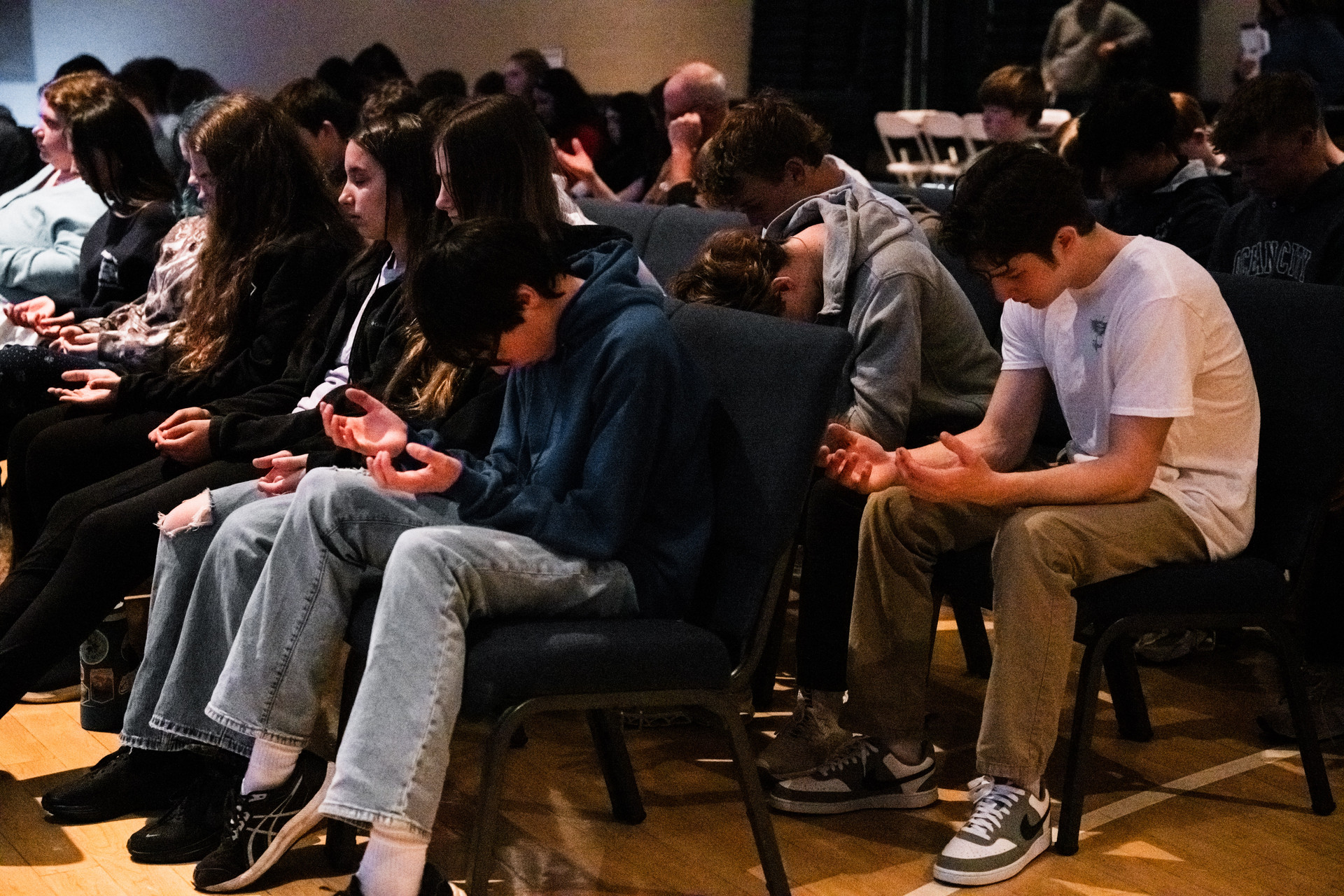
Practical Ways to Teach Students How to Pray
If we simply tell students, "Go pray," many won't know what to do.
Instead, give them handles. Small, practical ways to engage God that remove intimidation and build confidence. Here are several approaches that have become staples in our ministry.
1. Pray Through the Building
Invite students to walk through your meeting space before programming begins. Pray over the chairs, the stage, the leaders, and the students who will walk through carrying anxiety, loneliness, addiction, family struggles, questions about God etc. Suddenly the room becomes more than a room, it becomes holy ground.
2. Pair Em' Up
Pair students up and assign each pair a different room or area of the building. Give them three to five specific things to pray over. Specificity removes awkwardness and teaches students to pray with purpose.
3. Group Em', List It, Claim It
Instead of asking one person to pray over everything, list several specific requests: leaders, guests, salvations, the message, etc. Then invite students to claim one. Ownership and confidence grow when students know exactly what they're praying for.
4. Pray Scripture
Hand students a Psalm or the passage you'll be teaching that evening. Read it together, then simply turn the verses into personal prayers. They'll quickly discover that scripture teaches us how to pray.
5. Pray for Each Another
Pair students together. Have each person answer:
- What's one thing you're thankful for?
- What's one thing that's been difficult lately?
Then have them pray for each other.
6. Tee Em' Up
Instead of immediately dismissing after a message, create space.
Display prompts like:
- Jesus, thank you for...
- God, I confess...
- Father, help me...
- Holy Spirit, show me...
Give students several quiet minutes simply to talk with God. Have them journal or share with a partner afterward. Sometimes all they need is a simple prompt to get started.
7. Finish the Sentence...
Begin with a phrase like, "Lord, we thank you for..." Then invite students to respond with just one or two words.
"Grace."
"Family."
"Peace."
"Forgiveness."
"Pizza."
Prayer doesn't require eloquent speeches, just an honest heart.
8. Give Em' the Mic
Get students on stage to pray. Invite them to pray after announcements, after worship, before the message, or to close the night. The more students hear their peers talking naturally with God, the more normal prayer becomes. Confidence is contagious.
Persistent Prayer Creates Culture
James tells us, "The prayer of a righteous person is powerful and effective" (James 5:16).
Prayer doesn't become central because we say it is. It becomes central when we consistently create opportunities for students to practice it.
Over time, students stop seeing prayer as an awkward thing or something only "super spiritual Christians" do. They begin seeing it as a normal conversation with their Heavenly Father and something to do communally.
This competence leads to confidence, which becomes a catalyst for the gospel.
Our goal isn't simply to raise students who know prayer matters. It's to raise students whose instinct is to pray.
Imagine what gospel moments God might create because you patiently and persistently taught students how to pray.
So don't settle for simply, "Let's pray."
By God's grace and your persistent discipleship, somewhere along the way students will stop learning how to pray, and simply become disciples who do pray.
That may be one of the greatest gifts your ministry ever gives them.
