I wonder how different youth ministry would look if prayer became our first strategy instead of our last resort.
Most of us believe in prayer. We teach on it. We encourage students to do it. We ask volunteers to pray. We open meetings with it, close services with it, and make room for prayer requests in our small groups.
But how often does prayer actually come first?
Before the calendar, the event idea, the curriculum choice, the parent email, the volunteer meeting, or the pizza order, what if we stopped long enough to ask God what He wanted to do?
That sounds obvious, but I'm not sure we always live that way. At least not for me. I've had plenty of moments in ministry where I started with strategy and asked God to bless it later. I made the plan, built the schedule, talked to the leaders, ordered the pizza, and then prayed, "God, please use this."
That's not a bad prayer. God is kind to us even when we get the order wrong. But I wonder what we miss when prayer becomes the spiritual stamp we place on plans we've already made.
Before We Fill the Calendar
Most of us know what it feels like to build a ministry calendar with a strange mix of hope, pressure, and panic. You're trying to juggle school schedules, church events, camps, retreats, leader meetings, parent meetings, and everything else that somehow belongs to you now.
But before we ask, "What should we do this year?" maybe we need to ask, "God, what are You already doing in our students?"
That question might change the calendar. Maybe we don't need one more big event. Maybe we need more space for small groups. Maybe our students don't need another late-night lock-in where everyone leaves exhausted and vaguely sticky. Maybe they need a quiet weekend away where they can hear from God without their phones buzzing every thirty seconds.
Maybe our leaders don't need another information-packed training. Maybe they need a night where someone prays over them by name and reminds them that their faith matters too.
A calendar built through prayer may not look as impressive on paper. It may not be as full. But it might be more faithful.
Before We React
Youth ministry gives you plenty of opportunities to react. A student posts something concerning. A parent sends an email with more capital letters than necessary. A volunteer drops the ball. A student says something in small group that makes every adult in the room suddenly become very interested in the carpet.
There are times when we need to act quickly. Wisdom does not mean ignoring urgent situations. But prayer can slow our hearts down even when our hands have to move quickly.
Before we send the text, make the call, confront the student, reply to the parent, or rewrite the volunteer handbook in a moment of emotional inspiration, we can stop and pray.
We can ask God for wisdom. We can ask Him to help us respond with grace and truth. We can ask Him to help us see what we're missing. We can ask Him to protect the student, guide the conversation, and keep us from making the moment about our pride.
That last one is annoying, mostly because I usually need it.
Prayer has a way of exposing what is really going on in us. Sometimes I'm not just concerned about the student. I'm embarrassed. Sometimes I'm not just helping a volunteer grow. I'm frustrated that they made my night harder. Sometimes I'm not just responding to a parent. I'm trying to win.
Prayer helps me notice that before I do damage with holy-sounding words and an unholy attitude.
Before We Teach
I love teaching. I love planning a series, finding the right illustration, working through a passage, and helping students understand something in a way that sticks.
But teaching is not just transferring information. We are asking God to use His Word to form students into people who love and follow Jesus. That requires more than a clever opener. It requires prayer.
Before we teach, we can pray for the student who walks in distracted. The student who looks fine but is carrying something heavy. The student who has heard every Bible story but is still unsure if they can trust God. The student who is only there because their parents made them come. The student who is ready to respond but does not know how to say it out loud yet.
We can pray that God would do more than help us give a good message. We can pray that He would make His Word clear, personal, and alive in the room.
That kind of prayer changes how we teach. It reminds us that students are not an audience to impress. They are people to shepherd.
Before Frustration Takes Over
Every youth pastor has had that moment where they wonder if anything is working. Students are distracted. Leaders are tired. Parents are busy. The budget is thin. The church van has made a noise that sounds expensive. The game you thought would be amazing lasted four minutes because middle school boys found a way to turn it into minor property damage.
It can be easy to get cynical. It can be easy to complain. I'm not saying we pretend things are fine when they aren't. Ministry can be hard, and sometimes things really are broken.
But before frustration becomes the lens we see everything through, prayer gives us a better place to bring it.
We can tell God the truth. We can tell Him we're tired, discouraged, and unsure what to do next. The Psalms give us plenty of room for that kind of honesty. God is not surprised by our weariness, and He is not offended when we bring it to Him.
Prayer does not always change the situation immediately, but it can keep bitterness from taking root in us while we wait.
Building a Prayer-First Youth Ministry Culture
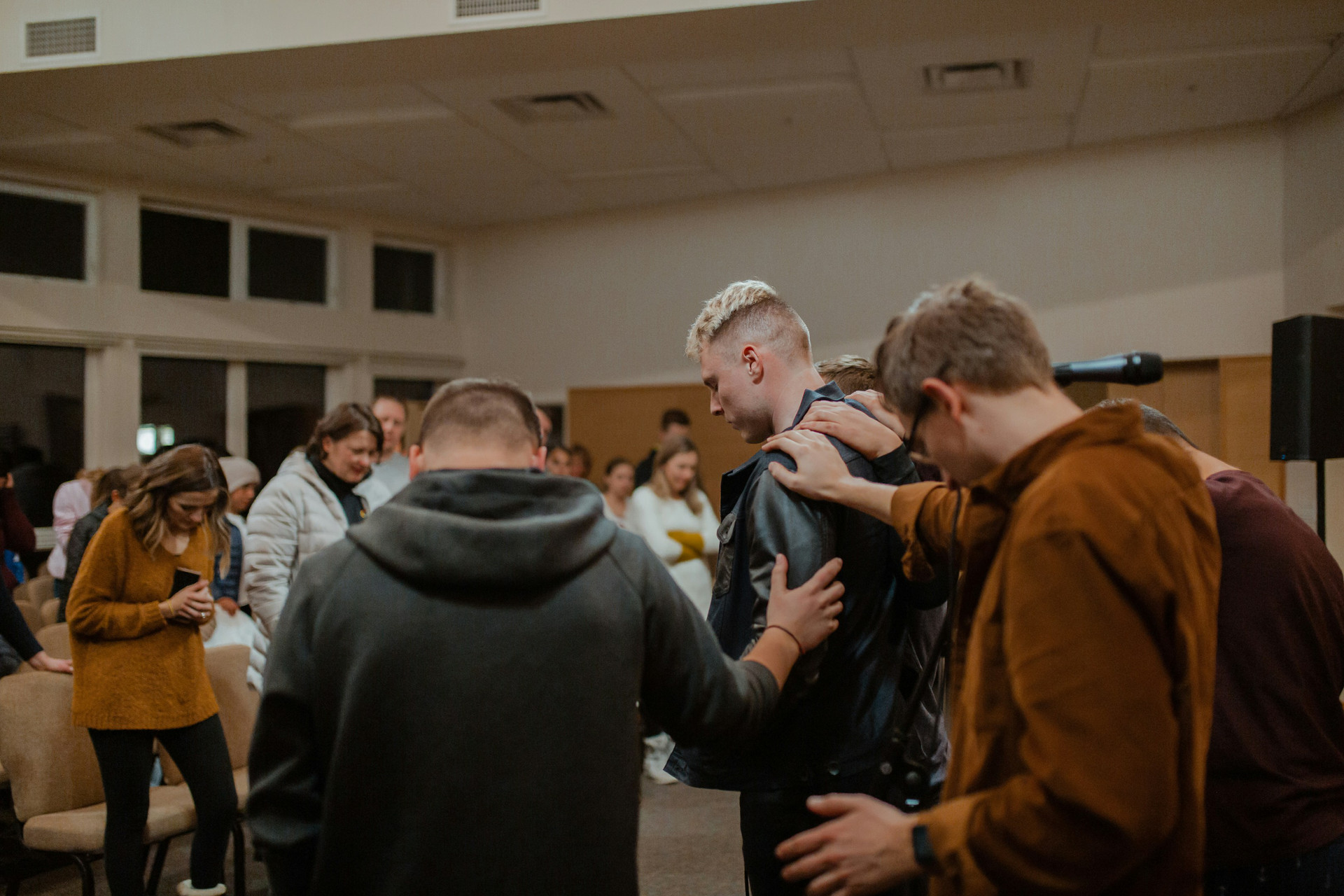
What would it look like if prayer was not just something we did from the stage, but something that shaped the culture of our ministry?
Maybe leaders pray over chairs before students arrive. Maybe small group leaders pray for their students by name throughout the week. Maybe student leaders gather before a service and ask God to move. Maybe parents receive a simple prayer guide instead of another announcement-heavy email. Maybe volunteer meetings occasionally include fewer updates and more time praying for students and families.
It doesn't have to be weird or complicated. It just has to be intentional.
Over time, a ministry that prays first starts to feel different because the people leading it are being shaped differently. We become less frantic. We become more dependent. We become slower to assume we already know what needs to happen. We become more aware that the ministry belongs to God before it ever belonged to us.
That may be the biggest shift of all.
Prayer reminds us that we are not the Savior of our students. We are not the Holy Spirit. We are not the ones who can heal every wound, answer every question, fix every family, or carry every burden.
We are servants. We are shepherds. We are witnesses. We are people who get to join in what God is doing.
So maybe the next time we sit down to plan, we start with prayer. Maybe the next time we feel the pressure rising, we stop and pray before we react. Maybe the next time we teach, we pray for more than a smooth delivery. Maybe the next time we feel frustrated, we bring that frustration to God before we let it shape our tone.
What would youth ministry look like if prayer became our first strategy?
I don't know all the answers. But I do think we'd be less impressed with our own plans and more attentive to God's presence.
And that would be a very good place to start.
